

Understanding health insurance options is crucial as we age, and knowing what is Medicare Part B is essential for anyone preparing for retirement or seeking supplemental coverage. Medicare Part B provides outpatient care, preventive services, and doctor visits that Part A does not cover. Without it, individuals may face unexpected medical expenses for routine or urgent healthcare needs.
Many people are unfamiliar with the intricacies of Part B, including costs, enrollment periods, and coverage limits. Learning what is Medicare Part B ensures you can make informed decisions that protect both your health and finances. This guide covers everything from coverage details and premiums to enrollment, termination options, and maximizing benefits.
Understanding Medicare Part B Coverage
Medicare Part B is the portion of Medicare designed to cover outpatient medical services. Unlike Part A, which primarily covers hospital stays, Part B pays for doctor visits, preventive screenings, outpatient procedures, and some home health services.
For many seniors and eligible individuals, understanding what is Medicare Part B helps clarify which services are included and which are not. Coverage includes diagnostic tests, medically necessary procedures, mental health services, and durable medical equipment. It also covers preventive services, such as vaccines, screenings, and annual wellness visits, which help detect health issues early.
Although Part B provides extensive benefits, it does not cover all services. Routine dental care, hearing aids, and most vision care are not included. However, understanding does Medicare Part B cover vision can help plan for supplemental coverage if needed.
Medicare Part B Costs Explained
One of the most important aspects of what is Medicare Part B is understanding its costs. The Part B premium is based on income and is updated annually. For 2026, the standard premium has been set to reflect changes in healthcare costs, ensuring coverage for outpatient services while balancing affordability.
The calculation of Part B premiums considers both the base rate and income-related adjustments. Learning how is Medicare Part B premium calculated allows beneficiaries to anticipate costs and plan their healthcare budgets effectively. In addition to premiums, Part B requires an annual deductible, after which coinsurance applies to most covered services.
Another factor is excess charges. Some providers may bill more than the Medicare-approved amount, referred to as Medicare Part B excess charges. Knowing how to manage these potential extra costs helps avoid unexpected expenses while maximizing the value of coverage.
Many individuals also wonder whether Part B premiums are tax-deductible. Understanding are Medicare Part B premiums deductible or are Medicare Part B premiums tax deductible allows for strategic financial planning and may provide modest savings on annual taxes.
Enrolling in Medicare Part B
Enrollment is a critical step for anyone considering what is Medicare Part B. The Initial Enrollment Period begins three months before an individual turns 65 and extends three months after. Late enrollment can result in penalties and delayed coverage.
For those who miss this window, the General Enrollment Period allows sign-ups between January and March each year. Knowing general enrollment period for Medicare Part B ensures you avoid costly gaps in coverage.
Special enrollment periods are also available for people who continue working past 65 or have coverage through an employer or federal program. For example, those with the Federal Employees Health Benefits program may need to coordinate benefits with FEHB and Medicare Part B.
Learning how do you sign up for Medicare Part B is essential to avoid penalties, ensure immediate coverage, and maintain financial stability. The process typically requires completing a form with the Social Security Administration or enrolling online through Medicare.gov.
Managing or Cancelling Medicare Part B
There are circumstances in which beneficiaries may consider terminating Part B. Understanding terminate Medicare Part B or how can I cancel Medicare Part B ensures informed decisions that protect both current and future coverage.
Cancellation of Part B is allowed but comes with considerations, including potential late enrollment penalties if you decide to re-enroll later. Knowing Medicare Part B cancellation rules and implications helps beneficiaries avoid unnecessary financial consequences and gaps in coverage. Consulting a Medicare professional is highly recommended before making any termination decisions.
Comparing Medicare Part A and Part B
| Feature / Aspect | Medicare Part A | Medicare Part B |
| Coverage Type | Inpatient hospital care, skilled nursing, hospice care, some home health services | Outpatient care, doctor visits, preventive services, diagnostic tests, some home health services |
| Primary Purpose | Covers hospital-related and inpatient services | Covers outpatient services and preventive care |
| Cost to Beneficiary | Usually premium-free if you or spouse paid Medicare taxes; deductibles and coinsurance may apply | Monthly premium (income-based), annual deductible, and typically 20% coinsurance for most services |
| Enrollment | Automatic at 65 if receiving Social Security benefits, or can sign up manually | Requires active enrollment; Initial Enrollment Period, Special Enrollment, or General Enrollment Period |
| Excess Charges | Generally not applicable | May apply if providers do not accept Medicare assignment (Part B excess charges) |
| Essential Services | Hospital stays, skilled nursing, hospice, inpatient rehab | Doctor visits, outpatient procedures, preventive screenings, lab tests, durable medical equipment |
| When It’s Used | When you are admitted to a hospital or need skilled nursing care | For routine care, doctor visits, outpatient procedures, and preventive care |
| Complementarity | Covers high-cost inpatient care | Covers frequent outpatient and preventive services, reducing financial burden from routine care |
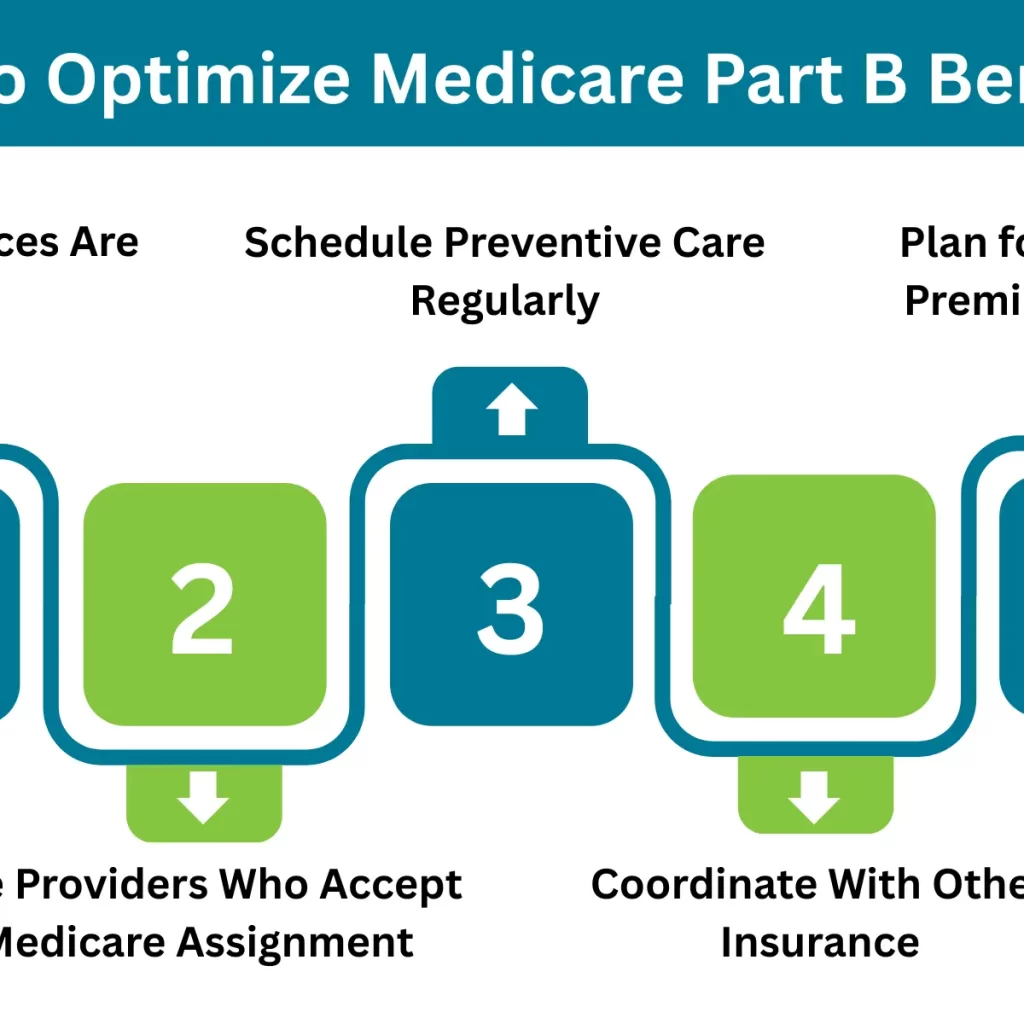
Tips to Optimize Medicare Part B Benefits
Maximizing Medicare Part B ensures you get the most value from your coverage while minimizing out-of-pocket costs. Understanding your options and planning ahead can protect your health and finances.
- Know What Services Are Covered
Familiarize yourself with all services included under Part B, such as doctor visits, outpatient procedures, and preventive screenings, to avoid unexpected medical expenses.
- Use Providers Who Accept Medicare Assignment
Choosing doctors and providers who accept Medicare assignment helps reduce excess charges and ensures you pay only the Medicare-approved amount for services.
- Schedule Preventive Care Regularly
Regular screenings, vaccines, and wellness visits allow early detection of health issues, potentially reducing long-term medical costs while maximizing Part B benefits.
- Coordinate With Other Insurance
Supplemental insurance, like Medigap or employer-based plans, can help cover coinsurance, deductibles, and services not fully covered by Part B, lowering your out-of-pocket expenses.
- Plan for Income-Based Premium Adjustments
Understand how your income affects the 2026 Medicare Part B premium and plan your budget accordingly to avoid surprises and ensure smooth coverage.
Conclusion
Understanding what is Medicare Part B is critical for anyone approaching Medicare eligibility. It ensures access to essential outpatient services, preventive care, and physician visits while providing financial protection against high medical costs. From enrollment to cost management and optional cancellation considerations, knowledge empowers individuals to make informed healthcare decisions. By taking the time to understand Part B coverage, premiums, and rules, beneficiaries can secure a more predictable, protected, and effective healthcare experience.
Take action today by reviewing your coverage, understanding the 2026 Medicare Part B premium, and planning your enrollment to safeguard your health and financial future.
FAQs
What is Medicare Part B for?
Medicare Part B covers outpatient services, doctor visits, preventive care, and medically necessary procedures that are not included in Part A.
What’s the difference between Part A and Part B and Medicare?
Part A covers hospital stays and inpatient care, Part B covers outpatient and preventive services, and together they form the core Medicare coverage.
Does Medicare Part B pay 100%?
No, Part B typically covers 80% of approved services after the annual deductible, with beneficiaries responsible for coinsurance and excess charges.
What is an example of a Medicare Part B service?
Examples include annual wellness visits, blood tests, diagnostic imaging, outpatient surgery, and some home health services.
How much is Medicare Part B per month?
The 2026 standard premium is set annually and may vary based on income, with most beneficiaries paying a standard rate adjusted for higher-income households.